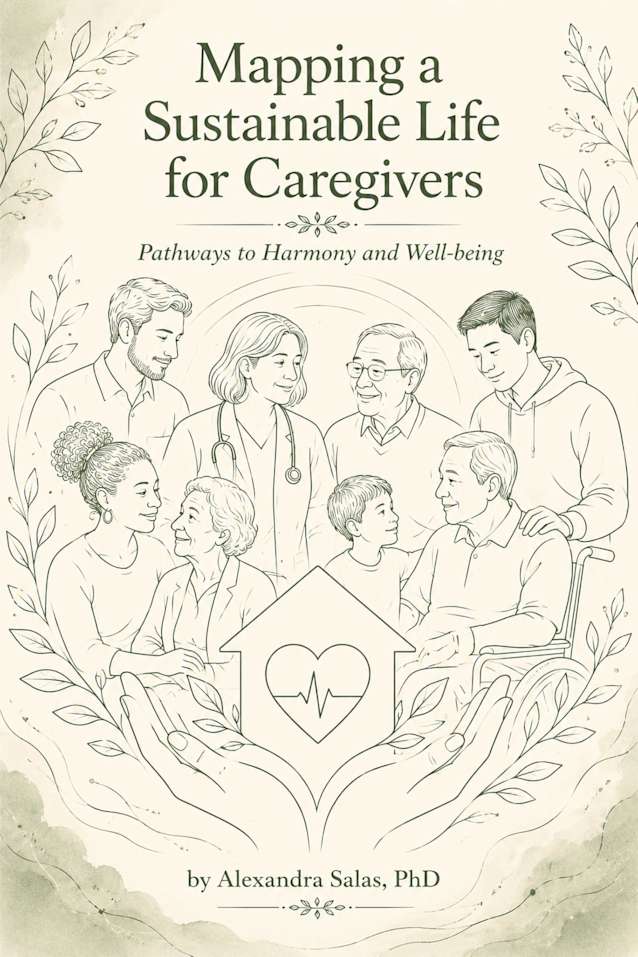
Mapping a Sustainable Life for Caregivers
About
Caregiving can begin with a diagnosis, an injury, a gradual change in a loved one’s abilities, or an unexpected family crisis. Before long, the caregiver may be managing appointments, medications, meals, finances, household responsibilities, emotional support, and difficult decisions-often while continuing to work, raise a family, and maintain other commitments.
Mapping a Sustainable Life for Caregivers: Pathways to Harmony and Well-being recognizes that every care plan depends on the well-being of the person providing the care. Caregivers are frequently treated as though they have unlimited time, energy, patience, and strength. In reality, they are human, exhaustible, and equally deserving of care, rest, support, and a sustainable future.
Dr. Alexandra Salas offers a compassionate and practical guide for navigating the emotional, physical, relational, and professional demands of caregiving. Rather than promoting an unrealistic idea of perfect balance, she encourages readers to pursue life harmonies-flexible arrangements that respond to changing needs, responsibilities, and personal capacity.
Through accessible guidance, reflective questions, and realistic planning strategies, readers will learn how to recognize caregiver strain, release perfection, respond to guilt and resentment, establish healthy boundaries, protect their identity, and build a more reliable support system. The book also explores the challenges of balancing employment and caregiving, including the unique pressures faced by those who work from home.
Readers are invited to develop high-capacity, ordinary, and survival-day plans; distinguish essential care from ideal care; match responsibilities to available energy; and create a minimum viable day when circumstances feel overwhelming. The goal is not to do everything. It is to protect what matters most while preserving the caregiver’s health, dignity, relationships, purpose, and future.
Grounded in research, professional perspectives, and lived caregiving experience, this book serves as both a compass and a source of encouragement. Readers may move through it from beginning to end or begin with the chapter that speaks most directly to their current needs.
Caregiving may change the shape of a life, but it should not require the caregiver to disappear. Sustainable care includes two people: the person receiving care and the person providing it.